
Have you ever noticed how two humble dumbbell exercises can light up your whole strength routine? Try dumbbell deadlifts (an exercise to build lower-body and back strength) and chest presses (which work your upper body) to hit both the main muscles and those little stabilizers that keep you balanced. It’s like turning your living room into a mini power zone! Each move brings a warm, energizing boost, making you feel steadier and more confident. Let’s take a step-by-step look at how these exercises can help you build everyday strength and feel amazing.
Effective Dumbbell Strength Training Exercises for Total-Body Strength
Dumbbell workouts offer a flexible way to boost full-body strength that fits into any routine. When you lift handheld weights, your body recruits small stabilizer muscles that help improve your balance and everyday strength. It’s amazing how a few dumbbell exercises can turn your living room into a dynamic workout space.
One standout move is the dumbbell deadlift, which works your quads, glutes, hamstrings, lower back, and core all at once. This exercise is a real powerhouse for building strength and muscle. As you lift, focus on hinging at your hips and keeping your spine neutral, just like keeping your back straight on a brisk walk. That extra push to engage your core not only boosts your performance but also helps protect your back.
Remember, muscle recovery is key to making progress. Recent research shows that you might only be about 40% recovered 48 hours after intense training, with 72 to 96 hours needed to reach roughly 80% recovery. So, giving each muscle group 2–4 days of rest is essential. Taking those rest days seriously helps you build strength safely and keeps your workouts effective over time.
Upper Body Dumbbell Strength Training Exercises
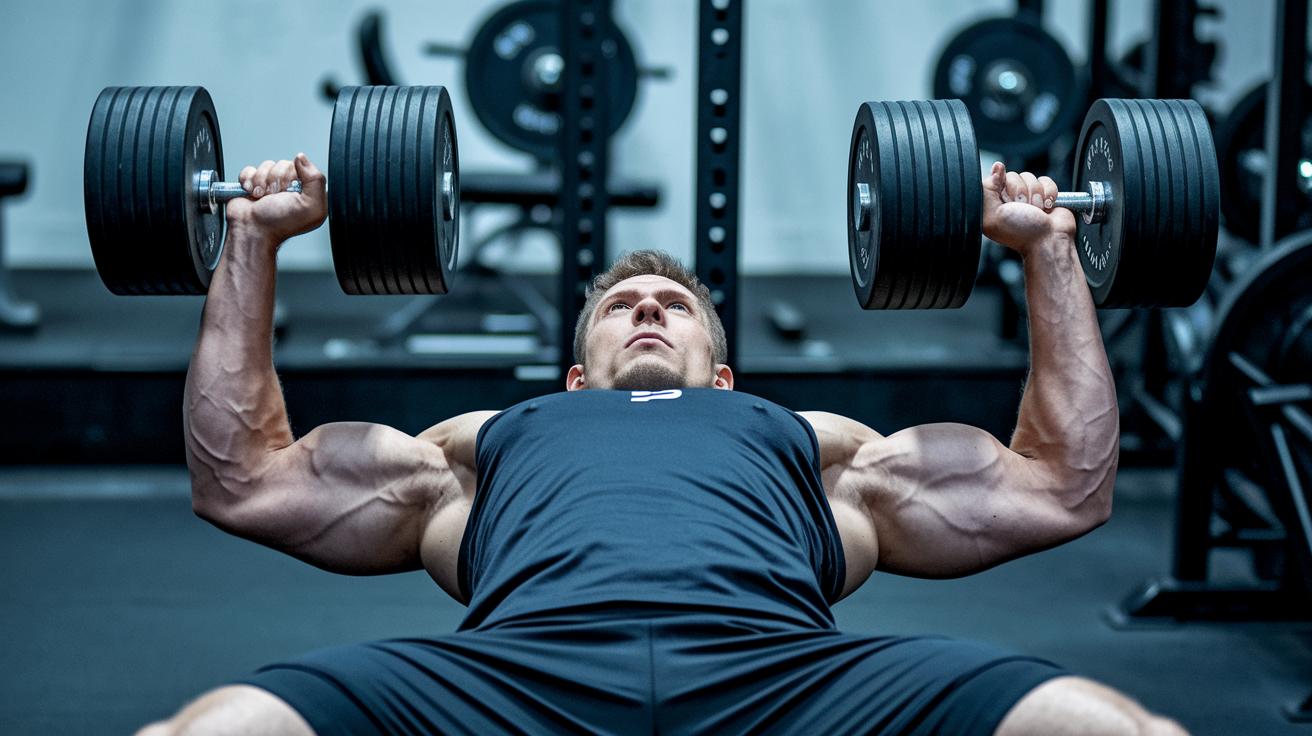
These exercises are designed to give your upper body a real boost. When you practice them, you’re not just toning your muscles, you’re building strength and improving your posture for everyday life. Each move targets a specific group of muscles, making your workout both effective and fun.
Dumbbell Chest Press
Lie on a bench and hold your dumbbells with care. Slowly lower them until your elbows hit a 90-degree angle, then press upward while giving your chest a strong squeeze. Keeping your core tight helps protect your back along the way. Fun fact: studies show that a focused squeeze at the top of the chest press can double muscle fiber activation.
Overhead Dumbbell Press
Stand with your feet about shoulder-width apart and lift the dumbbells straight above your head. Make sure your wrists stay neutral and your ribs are pulled down. This move works your shoulder muscles (specifically the front and middle parts) and your triceps. Keeping your core engaged not only shields your lower back but also makes everyday movements feel smoother.
One-Arm Dumbbell Row
Rest one knee on a bench and lean forward while keeping your back straight. Pull the dumbbell up toward your hip, feeling the stretch in your back muscles like the lats, rhomboids, and spinal erectors. Use slow and steady movements to maximize each rep. Did you know that a controlled one-arm row can boost your posture almost as well as targeted corrective exercises? (Back exercises at home with dumbbells)
Dumbbell Bicep Curl
Hold the dumbbells and focus on the downward part of your curl to really work your biceps. Keeping each rep controlled helps isolate the muscles and encourages steady growth.
Dumbbell Triceps Extension
You can do this exercise either overhead or as a kickback. The key is to isolate the long head of your triceps with controlled, deliberate movements. This focused stretch helps sculpt lean, powerful arms.
Together, these exercises create a well-rounded upper body routine that builds both muscle size and everyday strength. (Resistance training for muscle growth)
2 dumbbell strength training exercises: Ignite Your Workout
Start with the goblet squat. Stand with your feet about shoulder-width apart and hold the dumbbell close to your chest. Lower yourself into a squat, pushing your knees outward as you go. This helps fire up your quads, glutes, and core. Keep your chest open and your abs tight to stay steady. It’s a simple move that boosts both your strength and balance.
Next, try the reverse lunge. Step one leg back and bend both knees until your front thigh is almost parallel to the ground, make sure your knee stays right above your ankle. This motion targets your glutes and hamstrings while keeping your joints in line. Hold the dumbbells by your sides for extra resistance and balance. Each controlled rep really counts.
Then, move on to the dumbbell Romanian deadlift. Hold the weights in front of you and hinge at the hips with a tiny bend in your knees. Slowly lower the dumbbells to feel that satisfying stretch in your hamstrings and glutes. Keep your back flat and your core engaged so you’re protecting your lower back. It’s a fantastic move to strengthen your back and boost overall power.
Finally, finish with dumbbell step-ups. Stand before a sturdy, elevated platform and step up with one foot, driving through your heel. This exercise works your quads and glutes while testing your balance. Take it slow on your way down to keep those muscles fired up and the movement controlled.
Core Stability Routines Using Dumbbells

Building a strong core changes the way you move every day. When you add dumbbell exercises into your routine, you not only strengthen your muscles but also work on your balance and stability.
- Renegade row – While rowing each dumbbell, let your core and shoulders work together to keep you steady. It’s a great way to build strength and control.
- Dumbbell farmer’s carry – Simply walk with a dumbbell in each hand. This move wakes up your side muscles, upper traps, and grip, making you feel sturdy and balanced.
- Russian twist with a dumbbell – Sit down and carefully twist from one side to the other. This exercise targets your deep abdominal muscles (transverse ab muscles that help support your back) and sharpens your spinal control.
- Dumbbell plank drag – Get into a plank position and drag a dumbbell across the floor. This not only challenges your side stability but also builds up your shoulder strength.
- Weighted windshield wipers – Lie on your back and slowly move a dumbbell from one side to the other. This exercise promotes full-range motion in your core, highlighting both control and mobility.
Regularly practicing these exercises helps create a sturdy midsection, which is key for better posture, easier daily movements, and safer workouts. A strong core truly acts as the foundation for almost every activity you perform.
Sample Home Training Routines with Dumbbells
Are you looking to set up a simple workout at home that fits into your busy day? These routines give you a playful way to build muscle, burn extra calories, and increase your endurance, all with just a pair of dumbbells. Whether you're new to weight lifting or ready for a more challenging circuit, a clear plan can make your training enjoyable and effective.
| Routine Level | Exercises | Sets/Reps | Duration |
|---|---|---|---|
| Beginner | Dumbbell Chest Press, Goblet Squat, One-Arm Row | 2–3 sets of 10–12 reps | 60-second rest intervals |
| Intermediate | Overhead Press, Renegade Row, Dumbbell Lunges, Bicep Curl | 3 sets of 10–12 reps | 30–45-second rest intervals |
| Advanced | Combination circuits with compound moves and supersets (for example, Dumbbell Snatch, Split Squat, Triceps Extension) | 3–4 sets of 10–12 reps | About 30-second rests between supersets |
These routines let you change up your exercises as you improve. By beginning with simple moves and slowly adding more intensity, maybe by cutting down on rest time or mixing in supersets, you find a challenge that fits your style. Have you tried swapping exercises to keep things fresh? Enjoy exploring what lights your workout spark!
Progressive Overload and Proper Form Techniques

Gradually increasing your dumbbell weight is a smart way to get stronger without stressing your body. Try boosting your weight by around 2 to 5 percent each week. It’s like adding one more piece to a puzzle, you slowly build up strength as your body learns to handle more.
Keep an eye on your pace during each lift. For example, lift the dumbbell in about 2 seconds (that’s when you’re pushing upward) and lower it in 3 seconds (when you’re letting it come down). This steady rhythm helps your muscles work hard and smoothly. And don’t forget to watch your posture, keeping your spine neutral and your core tight is just as important as the weight itself.
Also, remember that lifting safely means thinking about your breathing too. Exhale when you lift and breathe steadily as you lower the weight. Focusing on your breath helps support your joints and core, protecting you from strain. Have you ever noticed how a small change in technique can totally boost your workout? Stick with these steps, and you’ll be building strength safely every time.
Common Mistakes and Injury Prevention in Dumbbell Strength Training Exercises
Many gym enthusiasts often slip up by not engaging their core during dumbbell presses and squats. This misstep can lead to extra stress on your lower back. Similarly, rushing your curls with too much swing means your muscles don't work as hard as they should, and it puts added pressure on your elbows. Also, pushing yourself too hard without enough recovery time can leave your muscles tired and more likely to get hurt.
To fix these issues, try these simple tips. For presses, imagine someone lightly tapping your back, that's your reminder to tighten your core as you lift. When doing curls, slow your movements down so that every pull works the right muscle. Keep your motions smooth and controlled, and choose weights that let you keep great form all throughout.
Deep, steady breathing is key when you exercise. Exhale as you push up and inhale as you lower the weight. And don’t forget to give yourself enough rest between workouts so your muscles can heal and grow stronger.
Final Words
In the action, this post walked through ways to strengthen your whole body with dumbbells. It outlined techniques for upper-body, lower-body, and core routines, emphasizing solid form and balanced recovery to keep workouts safe. We touched on compound moves like deadlifts for full-body muscle engagement and stressed the importance of rest days for better gains. These dumbbell strength training exercises offer practical steps to improve overall wellness, letting you mix science-backed tips with a fitness routine that feels achievable and rewarding.
FAQ
What are dumbbell workouts at home?
Dumbbell workouts at home combine functional movements and muscle toning using handheld weights, which stimulate stabilizer muscles and let you build strength in a flexible, convenient setting.
What does a Dumbbell Full Body Workout PDF provide?
A Dumbbell Full Body Workout PDF gives you a structured routine with visuals and clear cues, ensuring you cover every major muscle group with effective exercises at home.
How do beginner dumbbell workouts differ for females and males?
Beginner dumbbell workouts are designed with simple steps, clear form cues, and adjustable resistance, making them ideal for any gender starting safely and effectively in strength training.
Can I strength train using just dumbbells?
Strength training with just dumbbells is effective because they allow for versatile exercises that improve balance, activate stabilizer muscles, and target multiple groups simultaneously.
What is 5 4 3 2 1 strength training?
The 5 4 3 2 1 strength training method uses a decreasing rep count across exercises, which challenges muscle endurance and strength by progressively reducing repetitions in each set.
How should I train for strength using dumbbells?
Training for strength with dumbbells involves focusing on compound movements, controlled tempo, and steady resistance increases, which helps engage muscles deeply and improve stabilization.
What does the 3-3-3 rule in the gym entail?
The 3-3-3 rule in the gym involves doing three exercises with three sets each, balancing compound and isolation moves to create an efficient, full-body workout plan.
How do dumbbells compare to equipment like kettlebells, barbells, benches, treadmills, and resistance bands?
Dumbbells offer versatility and portability, making them a great choice on their own or alongside kettlebells, barbells, benches, treadmills, and resistance bands, each providing unique benefits to complement your workout routine.