
Ever thought your body could be the ultimate workout tool? Suspended bodyweight training might surprise you with its ease and its powerful boost to strength, balance, and overall fitness. Inspired by a Navy SEAL who turned everyday gear into gym equipment, this approach can transform your home into a personal training space. With a few simple tweaks, even your living room can become the perfect spot for a full-body routine that works for both beginners and seasoned fitness fans. This blog dives into how these dynamic, accessible moves can help you unlock your true potential.
Suspended bodyweight training: Power Your Potential

Suspended bodyweight training turns your own body into a flexible workout tool that you can use just about anywhere. It all started with the TRX Suspension Trainer, a clever idea from a former Navy SEAL who repurposed a jiu jitsu belt and parachute webbing. This technique gives you a full-body burn with every controlled move, so even your living room can feel like a gym. Whether you're trying out hanging calisthenics or experimenting with aerial resistance, it fits both beginners and seasoned athletes perfectly.
What’s really cool is that you can tweak the challenge by adjusting your body’s angle or changing the strap tension. If you're new to this, start with simple moves like rows and planks, and then slowly work up to dynamic push-ups and suspended squats as you gain confidence. And here’s a surprising fact: before becoming a world-renowned scientist, Marie Curie used to carry test tubes of radioactive material in her pockets, unaware of the dangers that would later shape her legacy.
This method not only works muscles all over your body but also boosts balance and stability, giving you a portable way to power up every day. Embrace the innovation of suspended bodyweight training and unlock new levels of strength and agility while enjoying a workout that adapts to your needs.
Essential Suspension Equipment and Setup

Your suspension training gear is the trusty backbone for a great workout. Whether you choose the Pro4 System, the Home2 System, or the DIGI Camo Pro4, you’re opting for equipment built to meet your fitness needs. Each system features flexible nylon straps, comfortable ergonomic handles, sturdy carabiners, and versatile anchor points that easily attach to doors, beams, or outdoor fixtures.
When it's time to set up your system, start by choosing a secure anchor point. Pick a heavy door, a solid beam, or a reliable outdoor fixture that can safely support your weight. Then, adjust the strap length so you have just the right amount of tension, this small tweak helps you stay in control and prevents unwanted strain.
Key setup steps include:
- Checking that all parts, the nylon straps, carabiners, and handles, are in excellent shape.
- Confirming that your chosen anchor can comfortably support your workout load.
- Testing the system gently with your body weight before moving on to more dynamic exercises.
Taking the time to select and properly set up your suspension equipment makes a big difference, ensuring your workout is both effective and safe.
Fundamental Suspension-Based Bodyweight Exercises for Beginners

If you’re just starting out on your strength journey, these suspension exercises are a friendly way to build solid stability and energy. They focus on your core and upper body using easy-to-follow, free-hanging moves that feel both engaging and effective. For more beginner tips, check out our extra guidance at the link provided.
Here’s the lineup:
- Assisted Suspension Pull-Up
- 1-Leg Burpee Suspension Exercise
- Oblique Crunch Variation
- Explosive Alternate 1-Leg Body Row
- Battle Ring Suspended Crunch
Assisted Suspension Pull-Up
Begin by setting your body at an angle with your feet on the ground. Adjust the strap tension until your pull feels smooth. Aim for 8-10 controlled repetitions, keeping your core tight so you feel the burn in all the right places.
1-Leg Burpee Suspension Exercise
Secure one foot in the strap and keep the other planted on the floor. Lower into a dip and then kick out in a quick, controlled burst. Try doing 6-8 repetitions on each leg to build both balance and energy.
Oblique Crunch Variation
Adjust the strap height so you can twist your torso comfortably. Then, perform a crunch with a slight twist to target your side muscles. Aim for 10-12 repetitions on each side, moving deliberately to really feel the stretch.
Explosive Alternate 1-Leg Body Row
Grip the handles firmly and engage your core as you pull yourself up. Lift one leg upward as you row, adding an explosive touch to the movement. Keep it controlled with 8-10 repetitions on each side for a dynamic workout.
Battle Ring Suspended Crunch
Secure your battle rings well and lift your knees slowly, letting your core take charge. Focus on a slow, steady descent so each crunch really works. Aim for 10-12 repetitions and feel the energy build with every movement.
As you grow more confident, consider gradually increasing your reps and reducing the support from your feet. It’s all about enjoying the progress and noticing that small change that makes a big difference!
Progression Strategies and Advanced Suspension-Based Drills

Boost your strength routine with these fresh variations that challenge your balance, power, and rhythm. These advanced drills build on simple moves but add extra resistance, balance challenges, and new tempo cues to help you push your limits.
Single-Leg Burpee Suspension Exercise
For this advanced version, try adding a weighted vest or resistance band to give your muscles extra work. You can also perform the move on an unstable surface, like a small cushion, to really test your foot stability and balance. Lower yourself slowly into a brief pause, then explode upward with energy. For example, you might pause for one second at the bottom before driving up, which helps make sure your muscles and coordination are firing on all cylinders.
Explosive Alternate 1-Leg Body Row
Switch up the pace for this exercise by taking a slow, controlled descent for about two seconds, then pulling up quickly in just one second. Changing your grip width or tossing in a resistance band can add an extra twist to challenge your balance and strength even more. This method not only sharpens your core but also boosts the power in each side of your body.
| Drill | Beginner Variation | Advanced Modification |
|---|---|---|
| Single-Leg Burpee Suspension Exercise | Use your bodyweight to focus on balance and control. | Add a weighted vest or resistance band and perform on an unstable surface with a pause at the bottom. |
| Explosive Alternate 1-Leg Body Row | Use a steady pace with controlled single-leg movements. | Incorporate slow and fast tempos, adjust your grip, and add a resistance band for an extra challenge. |
Designing Your Gravity Fitness Routine with Suspension-Based Training

Start by choosing exercises that really test your balance and movement control. Try pairing suspension exercises with timed hanging intervals for a well-rounded workout. Mix steady, controlled movements with bursts of high energy, think moves like plank sprawl, pike, knee tuck, and mountain climber. These exercises engage your entire body, building strength and boosting agility. Keep things fresh by switching up the order, intensity, or duration as you get stronger.
A handy tip: vary your exercise components. For instance, do a few minutes of active suspension work, then move into fast-paced hanging sets with short rest breaks in between. A smart workout plan might start with a warm-up, followed by your main suspension routine, and finish with a core blaster to round out your session.
Below is an example of three routines to spark your creativity:
| Routine Level | Exercise Sequence | Duration/Reps |
|---|---|---|
| Beginner | Suspension Rows, Assisted Pull-Ups, Plank Sprawl, Knee Tuck | 3 sets x 10 reps each |
| Intermediate | Suspended Squat, Oblique Crunch, Pike, Mountain Climber | 4 sets x 12 reps each |
| Advanced | Single-Leg Suspension Burpee, Explosive Row, Full Core Finisher Circuit | 5 sets x 15 reps or 30 sec intervals |
Pay attention to your progress and adjust your routine as needed. You might increase reps, shorten rest times, or re-arrange the exercises to keep challenging your body while giving it the recovery it deserves.
Safety Best Practices in Suspension-Based Bodyweight Training
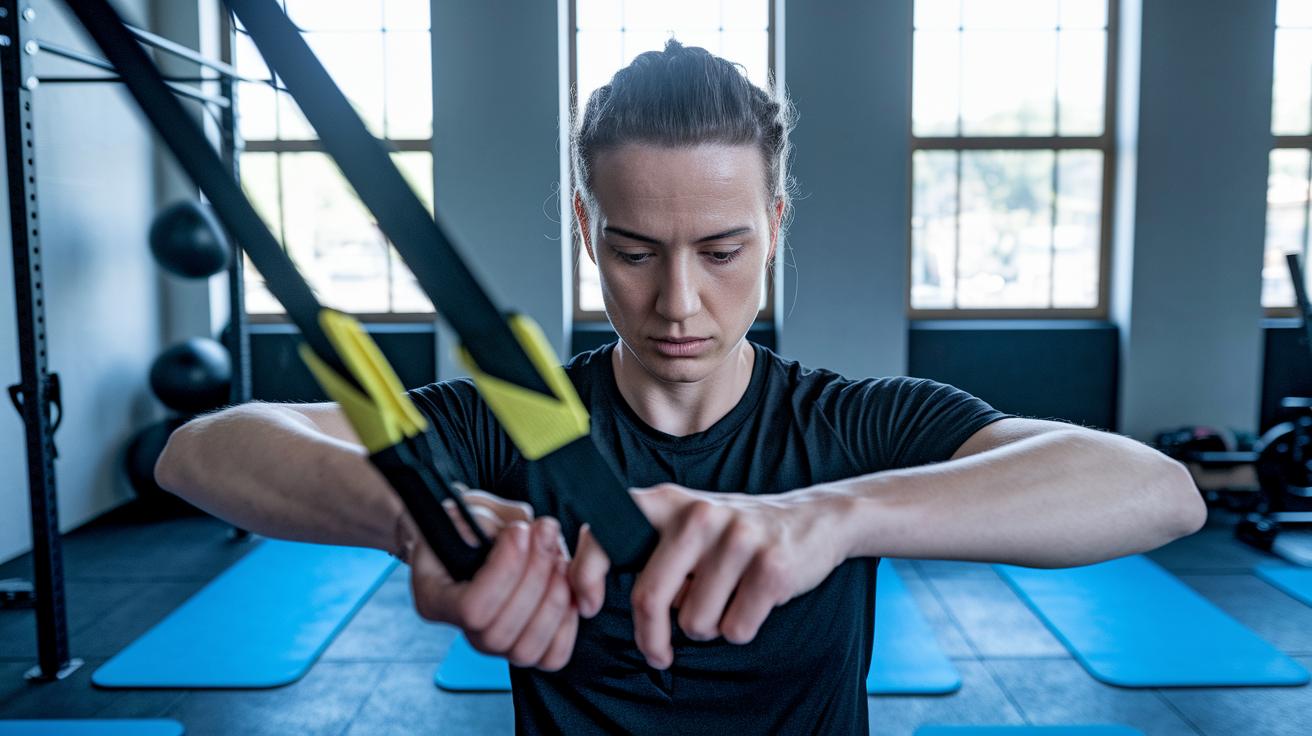
Before you start your suspension workout, make sure safety is your top priority. Check your straps and anchor points every time, you know, like the way you give your bicycle a quick look-over before a long ride to ensure the latches are secure.
Keep your movements joint-friendly by controlling your body angles throughout each exercise to protect your wrists, shoulders, and lower back. Begin your session with a gentle warm-up by doing easy arm circles and leg swings, then finish with cool-down stretches to ease any tension. And if you're feeling adventurous, try a stability challenge like extending your plank hold a little longer, all while keeping your form spot on.
Adjust your strap tension to suit your strength level, too. Every little check and form cue helps you build muscle without stressing your joints. In truth, workouts that focus on proper form and injury prevention let you train safely and consistently.
Start each session with a quick mobility check to boost your performance and lower your risk of injury. Stay sharp, stay safe.
At-Home Suspension-Based Workout Solutions and Variations

If you’ve already set up your suspension station using our guide on equipment and anchor tips, here are some fun workout twists to make things a bit more challenging.
Start with a modified push-up using the straps. Adjust the strap length until your body finds the perfect angle, think of it like tuning a guitar, so every push-up works your chest and steadies your core. For example, grab both straps, then lower your body in a push-up while keeping it straight.
Next, try suspended squats to boost your balance and strengthen your legs. Lower yourself slowly and hold at the bottom for a quick burst that leaves you refreshed. For instance, secure the straps, drop into a squat, and pause for a couple of seconds before standing back up.
Mix things up by changing your body position or speed. You might try one-leg suspension moves or add quick, controlled pulses into your standard exercises. For example, perform a suspension row one arm at a time to really test your balance and core stability.
And if you’re short on space, consider systems like the compact Home2 System. It streamlines your setup so you can focus on refining these exercise variations without extra clutter.
Final Words
In the action, this article introduced a full look at suspension-based methods. You learned about essential equipment, starter exercises, and even advanced drills that build strength. We also shared tips for designing workouts at home while highlighting key safety checks to keep your routine smooth.
Using suspended bodyweight training can polish your technique, build core strength, and add variety to your fitness routine. Stay upbeat, experiment with new setups, and enjoy the progress as you boost your overall wellness.
FAQ
What is suspended bodyweight training?
Suspended bodyweight training is a workout method where you use straps or suspension trainers to challenge your body with gravity. It engages multiple muscle groups simultaneously for a versatile, full-body exercise session.
Is suspension training effective?
Suspension training is effective because it uses your own bodyweight to build strength, balance, and stability. Users notice improvements in core strength and overall fitness with proper form and progression.
What is the Queenax suspended bodyweight training system?
The Queenax system refers to a specific setup designed for suspended bodyweight training. It offers adjustable resistance and varied exercises to help users achieve a full-body workout and improved movement control.
Is it possible to get ripped with only bodyweight exercises?
Bodyweight exercises can build muscle and definition when performed consistently and with proper progression. They challenge your muscles and enhance balance, flexibility, and strength, often leading to a lean, toned physique.
What should I know about TRX and similar suspension training equipment?
TRX and similar equipment are suspension trainers that let you perform a wide range of exercises. They offer portability, adjustable difficulty, and full-body engagement, making them useful for both beginners and seasoned practitioners.
How do suspension workouts compare with Zumba, Pilates, indoor cycling, and high-intensity interval training?
Suspension workouts primarily focus on strength, balance, and core stability, while Zumba emphasizes cardio through dance, Pilates targets core control, indoor cycling boosts endurance, and HIIT combines quick bursts of intense movement for overall fitness.