
Ever thought about how a quick 30-minute workout at home might give you more energy and strength? Imagine starting with a warm-up that gently wakes up every joint, kind of like how your car rumbles to life on a cool morning.
You don’t need fancy equipment either. Using just your body weight, you can build muscle, boost your balance, and feel more alert.
This simple routine proves that you can get a full, energizing workout without ever stepping into a gym.
Complete No-Equipment Calisthenics Workouts at Home

Refresh your training routine with a 30-minute workout that needs no equipment and is designed to boost your energy from head to toe. Start with a 5- to 6-minute warm-up where you gently move your arms and legs, imagine it as getting your joints ready just like you’d warm up your car on a chilly morning.
Each exercise is meant to be done in 3 sets. In the first two sets, use the rate of perceived exertion (RPE, which is a simple way to rate how hard you feel you’re working) to check in with yourself and tweak the intensity as needed.
This easy-to-follow plan includes moves that work your whole body using nothing but your own strength. You’ll do exercises like Wall to Good Morning, which wakes up your muscles slowly; Row, Lunge & Hold, which challenges your balance; and Push, Squat & Stabilize, which helps build strength all over. It’s like conducting a symphony of movement where every rep matters.
- Wall to Good Morning – 3 sets, 10 reps, RPE 7-8
- Row, Lunge & Hold – 3 sets, 8-10 reps, RPE 7
- Push, Squat & Stabilize – 3 sets, 10 reps, RPE 7-8
- Squat Deep & Rock Strong – 3 sets, 10 reps, RPE 7
- Reverse & Raise – 3 sets, 10 reps, RPE 7
- Super Side Strength – 3 sets, 10 reps, RPE 7
| Exercise | Sets | Reps | RPE |
|---|---|---|---|
| Wall to Good Morning | 3 | 10 | 7-8 |
| Row, Lunge & Hold | 3 | 8-10 | 7 |
| Push, Squat & Stabilize | 3 | 10 | 7-8 |
| Squat Deep & Rock Strong | 3 | 10 | 7 |
| Reverse & Raise | 3 | 10 | 7 |
| Super Side Strength | 3 | 10 | 7 |
Progressive Calisthenics Routines for Home Strength Gains
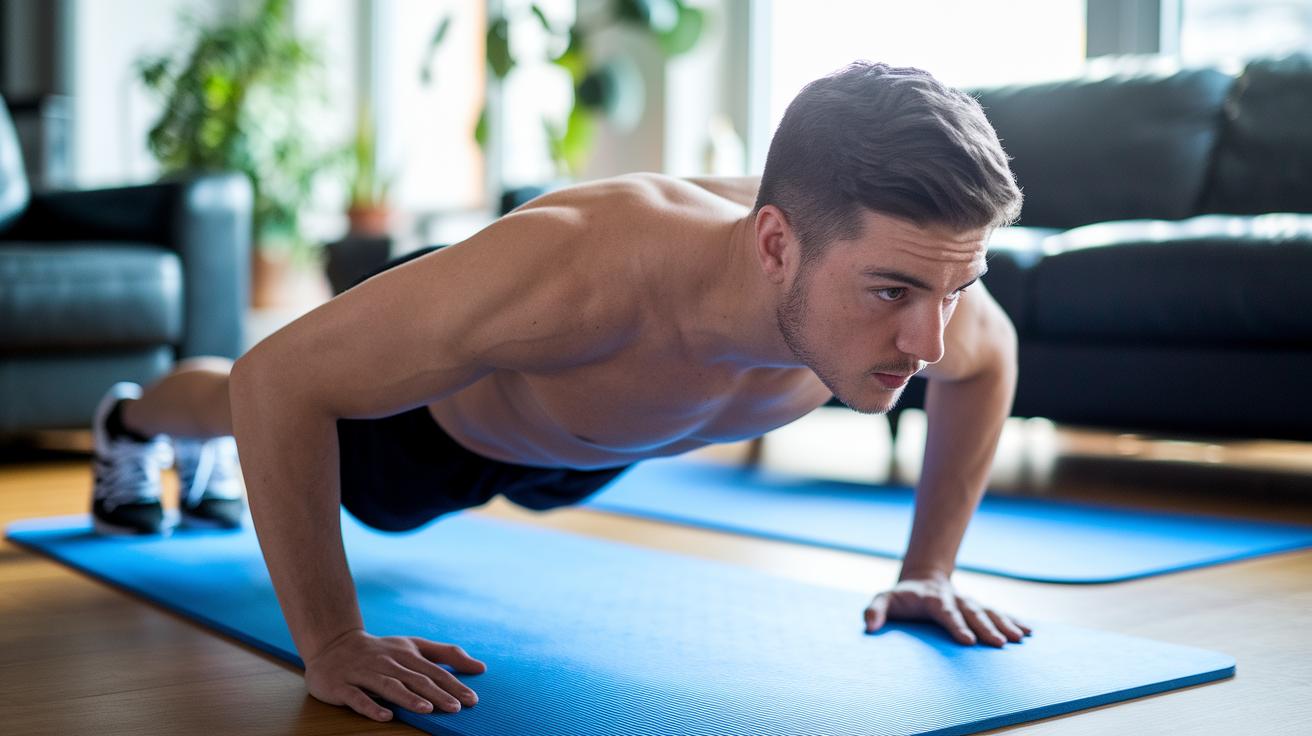
Starting a four-week calisthenics plan at home really comes down to gradual progress. In the first couple of weeks, focus on laying a strong foundation by using the RPE scale (that means rating how hard each exercise feels, similar to beginner strength training tips). By doing this, you're setting yourself up for changes over time.
After your body gets comfortable, try to mix things up. Increase your reps a bit, slow down your movements to really feel the muscle work, or switch to a slightly harder version of the exercise. Around Week 3, add some fresh twists with new pull, push, and lunge moves. You’ll also start paying special attention to the lowering part of each move, this slow, controlled descent helps spark more muscle growth.
As you hit the later weeks, the focus shifts to boosting both endurance and overall strength. Week 4 brings in exercises that demand stability, power, and precision. This approach not only makes your workout more engaging but also reinforces proper form, which keeps injuries at bay and motivates you to keep going.
Follow these simple tips:
- Increase the number of repetitions per set gradually.
- Transition to more challenging exercise variations as you build strength.
- Slow down during the lowering (eccentric) phase to maximize muscle benefits.
- Add in more pull, push, or lunge movements to keep your routine fresh.
- Adjust your perceived effort (RPE) as your endurance improves.
Targeted Calisthenics Conditioning: Core, Arms, and Legs at Home
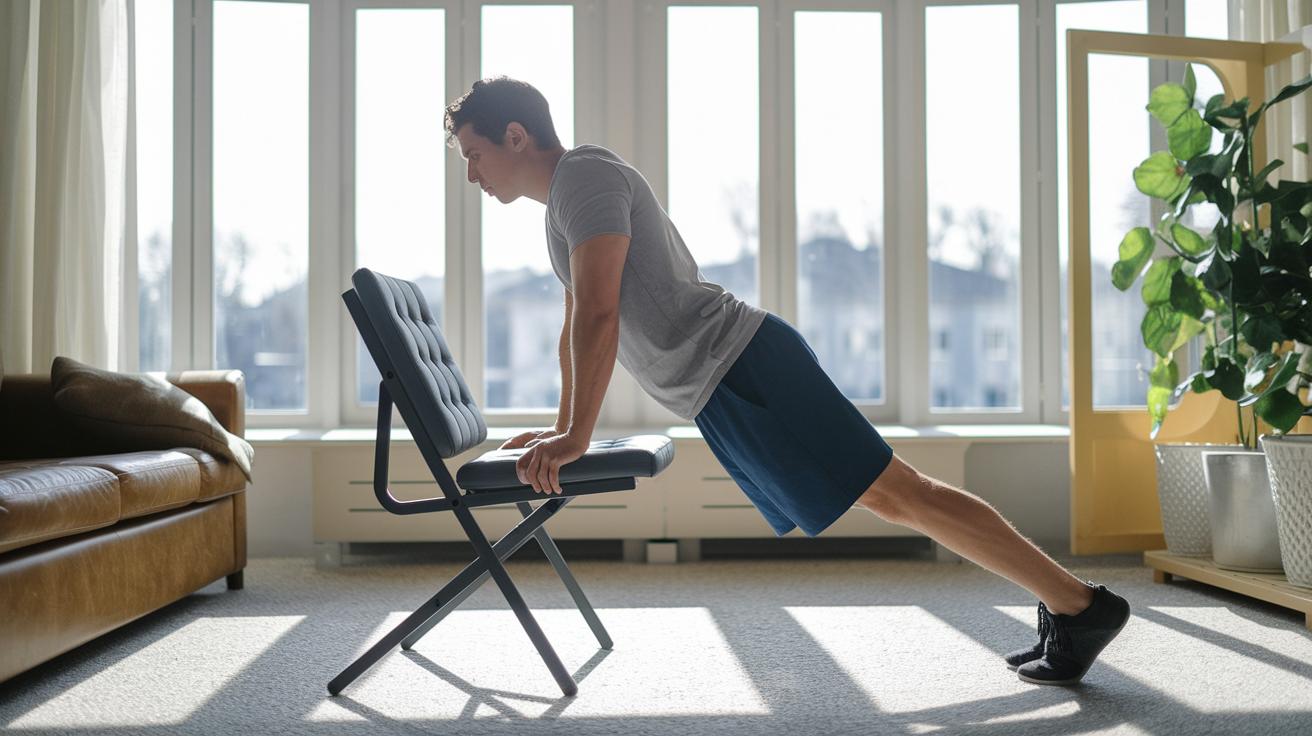
For your arms, start with vertical pushing moves like incline push-ups and dips that work your chest, shoulders, and triceps. You can mix in horizontal pulling too by doing something like Australian pull-ups with a chair and a broomstick on a safe surface. This combo creates a balanced push and pull routine that builds solid upper-body strength without any fancy equipment.
When it comes to your legs, begin with basic body squats and then move on to split squats or lunges. Once you feel confident, try one-legged variations to add an extra challenge. Also, include hip hinge exercises like the Nordic curl (a move that strengthens your hamstrings, the muscles on the back of your thighs) along with hip thrusts done on a couch to get your glutes firing properly. This step-by-step approach makes sure every part of your lower body gets the attention it needs.
For core work, add exercises such as the hollow-body hold and different plank positions to boost your stability and strength. These moves not only build a strong midsection but also support better posture for all your activities, setting you up nicely for more advanced routines.
| Region | Exercise | Progression Option |
|---|---|---|
| Arms | Incline Push-ups | Advanced Dips |
| Arms | Australian Pull-ups | Single-Arm Rows |
| Legs | Body Squats | One-Legged Squats |
| Core | Hollow-Body Hold | Weighted Plank |
- Feel free to modify exercises with knee variations if needed.
- Slow down during the lowering phase to keep control.
- Use a chair or wall for extra support if you’re just starting out.
- Adjust your range of motion based on your current strength level.
Warm-Up and Cool-Down Techniques for Effective Home Calisthenics

Before you jump into your workout, try spending about 5 minutes on a quick, dynamic warm-up. This helps get your body moving and your joints ready for action, like giving your muscles a gentle nudge to start the day. It warms up your muscles (making them more flexible and less prone to injury) and brings your heart rate up so you're set for a safe, energetic session.
For your warm-up, consider adding:
- Arm circles
- Leg swings
- Hip openers
- Walking lunges
- High knees
- Shoulder shrugs
After you finish your exercises, take a moment to cool down. Cooling down is key, it helps your muscles relax and paves the way for recovery. Doing some static stretches (simple, held positions to ease muscle tension) gradually lowers your heart rate and soothes away any built-up tightness. This step not only helps with flexibility but also leaves you feeling refreshed and ready for the next workout.
Try including these cool-down moves:
- Forward fold
- Quad stretch
- Chest opener
- Spinal twist
Safety and Modification Guidelines for Calisthenics Workouts at Home
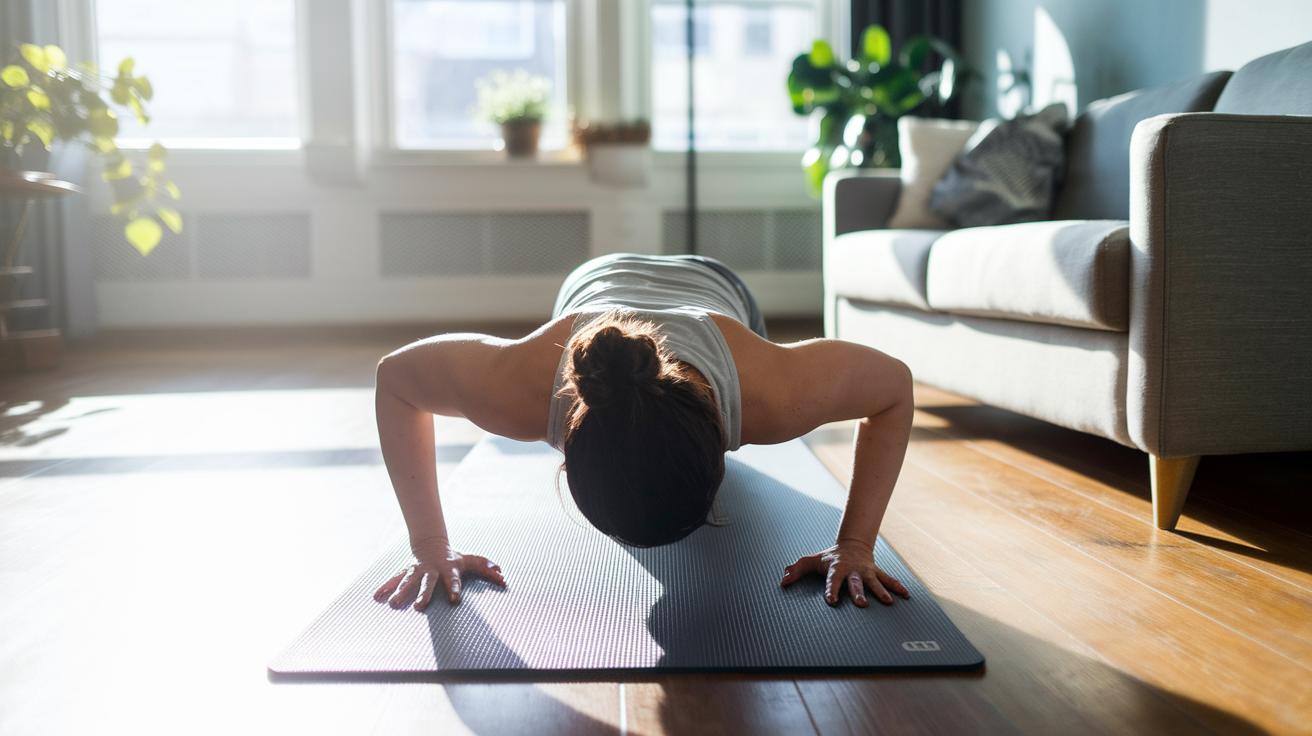
When you exercise at home without fancy equipment, the first step is to choose a safe spot where you can move freely. Secure any makeshift tools, like chairs or towels, on a floor that won’t let them slip. As you work out, keep your chest up and your spine in a natural, neutral position. And don’t forget to give your muscles a break, aim for about three to four sessions each week with a rest day in between to allow your body to recover and grow stronger.
Stick to proper form by lowering yourself slowly. Taking about three to five seconds on each controlled descent not only makes your workout safer but also helps you truly feel each muscle working. Listen to your body and make small tweaks to your moves when needed, so you can keep things safe and effective.
- Try knee push-ups if regular push-ups feel too hard.
- Do incline push-ups to lighten the load on your joints.
- Use band-assisted pull-ups to ease into vertical pulling motions.
- Reduce your range of motion when a move feels too challenging.
- Slow down each rep to gain better control and precision.
Remember, good food and water are key parts of making your body stronger. A balanced diet and proper hydration, check out this balanced diet and hydration tip, help your muscles bounce back, so you can safely progress with your home workout routine.
calisthenics workouts at home: Energize Your Routine

Plan your week by switching between workouts for your upper body and lower body. This way, your muscles get the recovery they need while you keep your routine fresh. Try aiming for 3-4 workouts each week and take at least one rest day between complete body sessions. A 30-day challenge can be a fun way to see your progress, you can even download a PDF or use a mobile guide to keep your schedule on track. And hey, sharing your routine in online groups might just boost your motivation and give you new ideas.
| Day | Session Type |
|---|---|
| Monday | Upper Body Workout |
| Tuesday | Lower Body Workout |
| Wednesday | Rest/Active Recovery |
| Thursday | Upper Body Workout |
| Friday | Lower Body Workout |
| Saturday | Full-Body Mobility |
| Sunday | Rest Day |
- Mark your workout days on a calendar to keep things consistent.
- Take your rest days seriously so your muscles can rebuild.
- Chat with online communities for fresh tips and a dose of extra motivation.
Final Words
In the action, this guide offers a complete, equipment-free body session that kicks off with a dynamic warm-up, then delivers six core exercises with clear RPE guidance, and finishes with a cool-down to ease muscles. It touches on progressing your moves, tailoring modifications for safety, and organizing a weekly plan that balances effort with recovery.
These calisthenics workouts at home empower you to embrace a practical, science-backed routine that puts your well-being first. Enjoy each move and keep the momentum going!
FAQ
How can beginners start calisthenics workouts at home for any gender?
The calisthenics workouts at home for beginners provide step-by-step routines that work for everyone, including both men and women. They offer easy-to-follow exercises, often with clear visual guides or PDFs for extra support.
Are free and downloadable calisthenics workout plans available online?
The free calisthenics workouts at home and downloadable PDFs offer accessible plans that you can use without cost. These resources let you track progress, customize routines, and explore various mobile apps designed for calisthenics.
Can you do effective calisthenics workouts at home with no equipment?
The calisthenics workouts at home no equipment option proves that you can build strength and improve fitness by using just your body weight, with routines designed to maximize benefits safely and effectively.
Is it possible to train calisthenics at home?
Training calisthenics at home is entirely possible, as many routines are designed for indoor settings. They use bodyweight exercises that are adaptable regardless of space or available resources.
Is 20 minutes of calisthenics a day enough?
The 20 minutes of calisthenics a day can offer noticeable benefits, especially for beginners, by increasing strength and flexibility when done consistently with focused intensity.
Can you build muscle by only doing calisthenics?
The practice of building muscle solely through calisthenics leverages bodyweight exercises to stimulate muscle growth, particularly when workouts progressively challenge your strength and include full-body routines.
What does the 80/20 rule in calisthenics mean?
The 80/20 rule in calisthenics means focusing on 80% of the core effective exercises that yield most of your results, while dedicating 20% of your time to supplementary moves for balanced strength gains.