
Ever wondered if a gym is really necessary to get in shape? Bodyweight training lets you use your own strength to build muscle and improve balance in a friendly, accessible way.
In just 20 minutes, you can work your entire body with simple moves like wall push-ups, squats, and lunges. These exercises tone your muscles, boost your energy, and lift your confidence.
Imagine finishing a session feeling strong and refreshed, all without costly equipment. It's a straightforward and effective way to keep fit while enjoying every step of the process.
Effective Bodyweight Training Routines for Women
Ready to give your workout a fresh start? This 20-minute routine is perfect for anyone new to calisthenics. It’s split into three circuits that help you build strength and balance with no equipment needed.
For each circuit, do 10 reps of every move and rest for 30 to 60 seconds between exercises. Aim for 2 to 4 sessions each week, and make sure to take about 48 hours off between workouts so your body can recover.
Circuit 1 kicks off with wall push-ups, which gently work your chest and shoulders. Next come knee push-ups to target your chest, triceps, and core. Then move onto bodyweight squats that strengthen your quads, glutes, and hamstrings. This set of moves lays a strong foundation. If you need extra tips, check out this guide for strength training for beginners: "strength training for beginners" (https://nobrainertrends.com?p=178).
Circuit 2 picks up the pace a bit. Start with lunges that build your leg and glute strength. Follow these with mountain climbers that give you a quick burst of cardio while activating your core. Then, hold a plank to firm up your core, shoulders, and lower back. These exercises help create a steady and controlled pace.
Circuit 3 wraps up the workout by focusing on lower and upper body toning. Begin with wall-sits to feel a deep burn in your quads and calves. Then, do tricep dips to sculpt your upper arms. Next, add calf raises to target your lower legs. Finish with the boat pose, which is excellent for deep core activation and balance. Each circuit should take about 6 to 8 minutes, keeping the whole session within 20 minutes.
Enjoy your workout and feel the energizing boost!
Key Bodyweight Exercises and Proper Form for Women
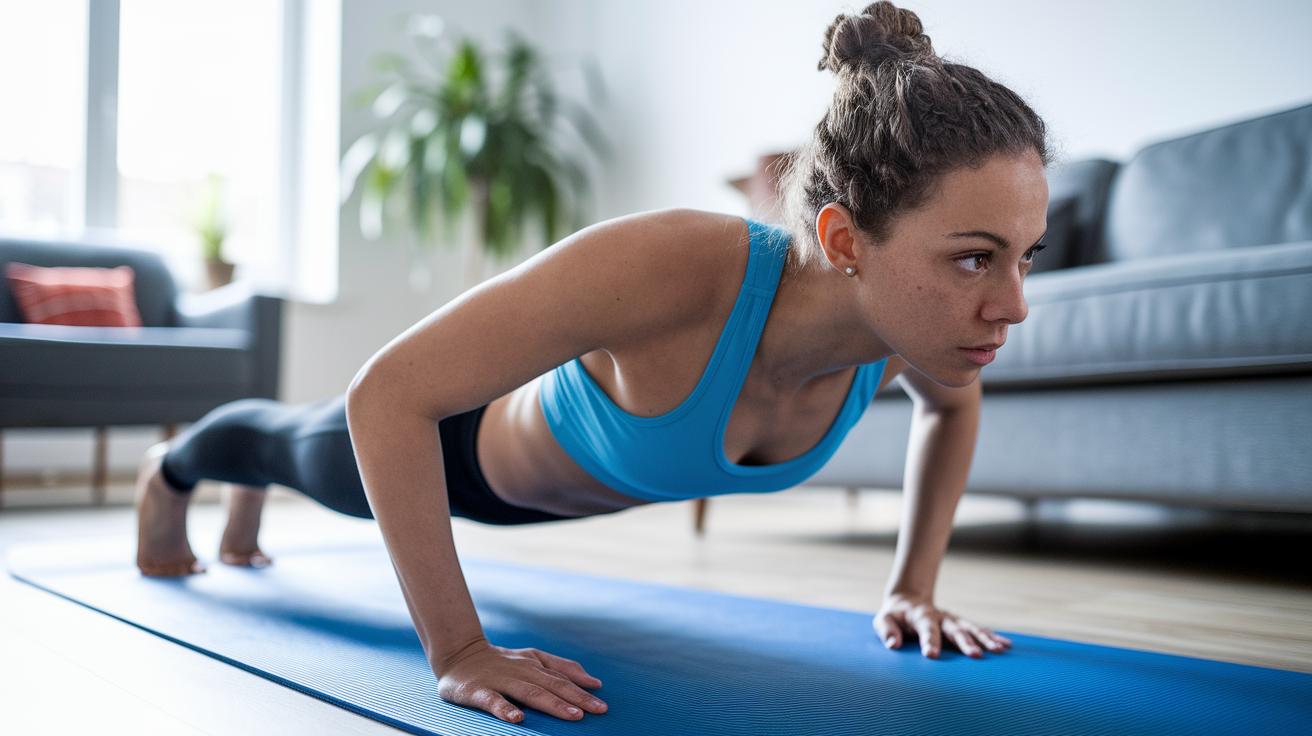
Modified push-ups build strength in your chest, shoulders, triceps, and core. Imagine your body as a sturdy plank that slowly lowers with care. Keep your elbows snug against your sides and focus on engaging your shoulder blades.
High planks are a fantastic way to work your core and shoulders. Start with your wrists right under your shoulders and make sure your body forms a straight line from head to toe. Keep your hips steady and let your abs take the lead, just like a firm board that resists any movement as you breathe calmly.
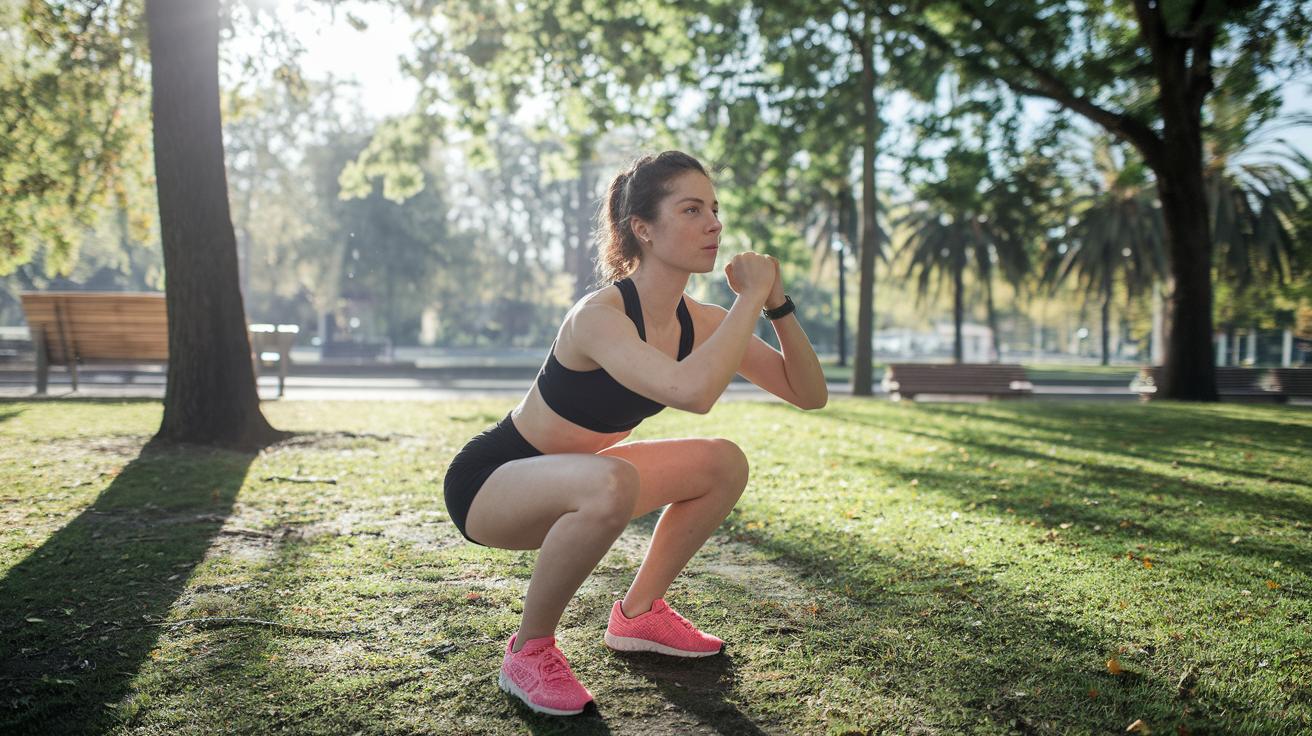
For bodyweight squats, stand with your feet about shoulder-width apart. Picture yourself lowering into an invisible chair, so that your knees stay over your toes and your back remains straight. Go slow and steady, feeling each muscle in your quads, glutes, and hamstrings build strength as you move.
Mountain climbers mix a core workout with a burst of cardio. In a high plank, quickly alternate driving your knees toward your chest. Keep your hips down and your motions steady, letting your heart pump and your muscles tighten with each move.
Wall-sits are great for targeting your quads and calves. Lean back against a wall and slide down until your thighs run parallel to the floor. Stay in that posture with smooth, steady breaths, feeling the burn in your legs.
Lunge jumps bring a dynamic twist to your routine, powering up your glutes and quads. Step into a deep lunge, then push off to switch legs in mid-air. Make sure your knees line up with your toes as you land softly, keeping each jump controlled and safe.
Calf raises focus solely on strengthening your calves. Just lift up onto your toes on a flat surface, moving in a smooth, calculated way that isolates those muscles.
Tricep dips work wonders for your upper arms. Using a stable chair or low table, lower yourself slowly while keeping your elbows pointed straight back to really feel the resistance in your triceps.
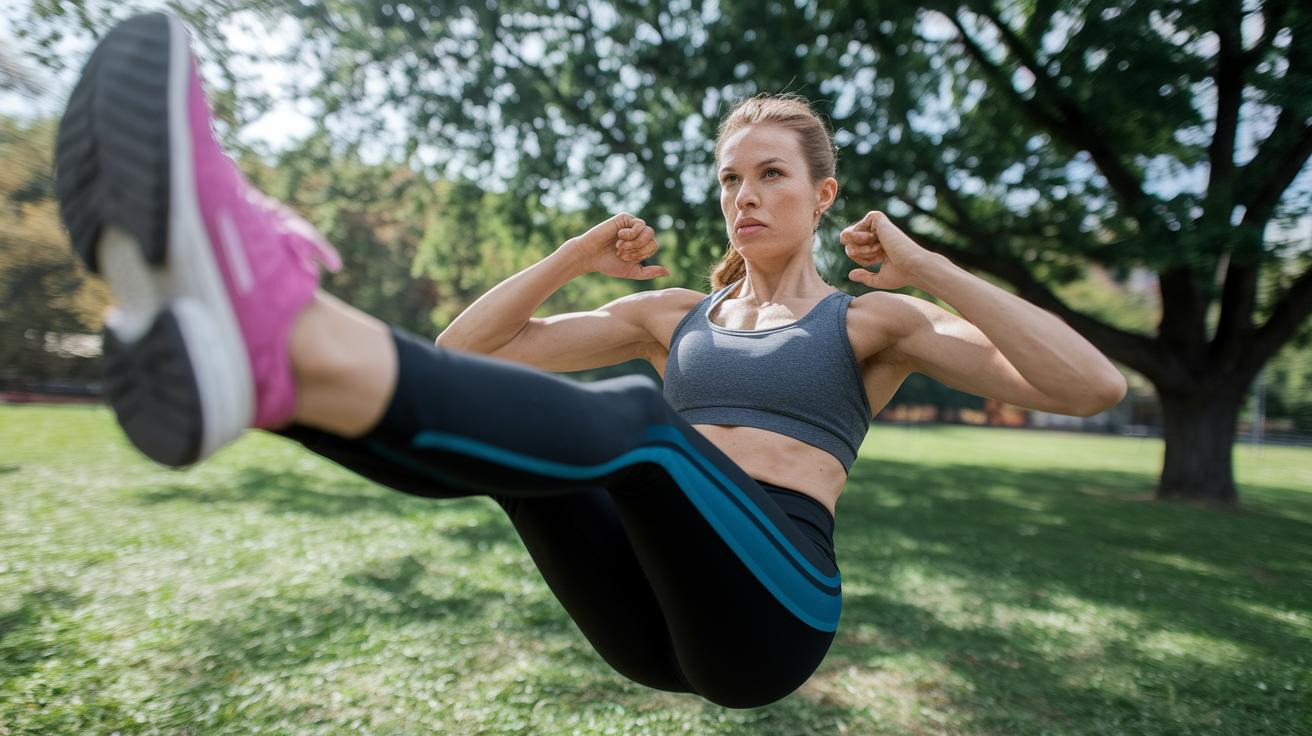
For a deep core challenge and a boost in balance, try bicycles and boat pose. With bicycles, alternate by touching your elbow to the opposite knee with gentle, controlled twists. In boat pose, lift your legs while keeping your spine long and straight, engaging your core fully with every breath.
Modifications and Progressions in Women’s Bodyweight Training
When you’re just getting started with bodyweight training, it’s great to use beginner-friendly changes that help you build strength without overwhelming your body. For example, try elevated push-ups, where you rest your hands on a sturdy surface. This trick lightens the load on your arms. You can also do knee-supported planks to strengthen your core gently, imagine yourself as a calm, strong bridge. Half squats are another friendly option; they work your thighs and butt while keeping your knees safe, and assisted lunges, using a chair or wall for balance, help you nail your form. Box step-ups let you focus on leg strength in a controlled, easy-to-follow way.
As you grow more confident, it’s time to gradually dial up the challenge. Start by increasing your repetitions from 8 to 20. You might also try dynamic moves like plank-to-push-up, a smooth transition that makes your core and upper body work together. Think of it as slowly shifting gears where every move lights up your muscles. And if you reduce your rest time from 60 seconds to 30, you keep your heartbeat up, boosting your endurance bit by bit.
After about four weeks, consider adding some plyometric moves such as jump lunges or clap push-ups. Studies over a 12-week period show that steadily intensifying your workouts, without needing extra weights, can lead to big strength gains and a real boost in confidence. Have you noticed how a gradual change makes your achievements feel even more rewarding?
Safety and Form Guidelines for Women’s Bodyweight Workouts
Start every workout with a lively warm-up to get your muscles and joints ready. Try out leg swings, arm circles, and glute bridges. For example, when doing leg swings, gently move each leg forward and back to wake up your hip muscles.
As you move into your main workout, stay aware of your body and keep good posture. In exercises like planks and squats, keep your spine in a straight line from head to heels. During push-ups, line up your shoulders right above your wrists so the weight is shared evenly. When doing lunges, make sure your knee stays right over your toes to avoid added stress. For dips, focus on aligning your wrists to safely support your upper body, and with mountain climbers, try to keep your hips steady without dropping them too low.
Remember to breathe steadily: inhale as you lower your body and exhale when you push up or exert effort. Think of it as fueling your muscles, breathing in calm and breathing out energy.
After your workout, take time to cool down with gentle stretches like a hamstring stretch, chest opener, and child’s pose. These moves help release tension and improve your flexibility.
If you ever experience sharp pain or discomfort, stop right away. Listening to your body is the best way to keep your workouts safe and effective.
Nutrition Strategies to Complement Bodyweight Training for Women
Making sure you get the right fuel for your workouts helps your muscles bounce back and keeps your hormones balanced so you can feel naturally strong. Start by aiming for around 1.2 to 1.6 grams of protein per kilogram of body weight. Choose lean options like chicken, beans, or low-fat dairy to support muscle repair and growth. Next, include whole grains and fruits, which provide a steady supply of energy to power you through dynamic workouts. And remember, a handful of healthy fats from sources like avocado or nuts not only tastes great but also helps balance your hormones and keeps your energy lasting longer.
After your training, enjoy a simple snack like Greek yogurt with berries within about 30 minutes to jump-start recovery. Staying well-hydrated is equally important, so try to drink at least 2.2 liters of water throughout the day to keep your muscles working smoothly. Don’t overlook micronutrients, such as iron and calcium, which are essential for muscle and bone strength. For more tips on balancing your macros and planning your meals, check out our article on nutritional strategies for hormonal balance. Eating right isn’t just for today’s workout, it lays the groundwork for a healthy lifestyle that supports you every step of the way.
Sample 12-Week Bodyweight Training Plan for Women
This simple plan is split into three phases, helping you grow stronger over 12 weeks. Think of it as a friendly guide where you learn proper form, slowly boost your workout intensity, and jot down your progress in a fitness diary.
During Weeks 1 to 4, the focus is on mastering your form. Aim for two sessions each week. Start every session with a quick 5-minute warm-up that might include leg swings, arm circles, and some light dynamic stretches, get your body ready to move! Then, move on to three circuits of exercises like wall push-ups, bodyweight squats, lunges, and planks. Do 8 to 10 repetitions of each move, paying close attention to using the right technique. Wrap up your session with another 5 minutes of cool-down stretches targeting the major muscles you worked, and take about 60 seconds of rest between circuits. Write down your sets, reps, and how hard you felt you worked to see your progress over time.
For Weeks 5 to 8, add one more session per week so you’re doing three sessions total. Now, boost your reps to 12 to 15 per exercise and cut your rest time to about 45 seconds. This step helps your body adjust to more challenge while building endurance and strength. Keep your warm-up, workout circuits, and cool-down just like before, and remember to log your progress. It’s amazing how these small changes can help you build up over time!
In the final phase, Weeks 9 to 12, it's time to try some advanced moves. Swap out a few basic exercises for tougher options like plyo lunges and decline push-ups. Also, shorten your rest breaks to 30 seconds to keep your heart rate up. Continue starting your session with a 5-minute warm-up and ending with a similar cool-down. No matter the phase, make sure you give yourself 48 to 72 hours between sessions to recover properly.
Throughout these 12 weeks, keep a record of your progress in a fitness diary. Seeing your journey laid out can be super motivating! And if you’re curious for more tips on getting started with weight training, check out beginner weight training for women at this link: https://nobrainertrends.com?p=423
Tracking Progress and Staying Motivated in Women’s Bodyweight Training
Start by keeping a workout log or using an app to note down every session. Write the date, list the exercises you did, record sets and reps, and add a few notes about your form. For example, you might write, "Today: 10 modified push-ups, 12 squats, and a 30-second plank. Felt strong all throughout."
It helps to track little wins, like noting your maximum number of push-ups or the longest time you held a plank. Try setting clear goals by adding 2 extra reps each session or reaching a 10-second longer plank hold the next time. You can also snap a monthly progress photo to visually celebrate your journey and boost your confidence.
Joining a virtual fitness group or community can be a great way to stay motivated and discover fresh ideas, like mixing in a yoga flow for variety. Rewarding milestones with a new workout accessory or gear can also give you a fun, uplifting boost.
Remember to update your fitness journal regularly so you can see your progress over time. And always listen to your body, if you feel tired, give yourself some extra recovery time. Tracking your workouts and celebrating every little improvement helps you create a strong, sustainable path to better fitness and well-being.
Final Words
In the action, the article explored a balanced routine with moves like wall push-ups, bodyweight squats, and lunges, along with easy modifications for beginners. It covered proper form, essential safety tips, and even a sample 12-week plan to help track improvement. A quick look at nutrition strategies wrapped everything up, reminding us that strong habits start from within. Embrace these practical tips for bodyweight training for women, and stay positive as you build a healthier, more energized lifestyle.
FAQ
What are some bodyweight training resources available for women?
Bodyweight training resources for women include downloadable PDF guides and online workout plans. They outline routines with effective exercises like push-ups, squats, and planks tailored to different fitness levels.
How can women over 50 adapt bodyweight training routines?
Bodyweight training for women over 50 emphasizes controlled movements and exercise modifications, such as wall push-ups and knee-supported planks, ensuring safe routines that build strength while reducing joint stress.
Is bodyweight training enough for women seeking fitness gains?
Bodyweight training can be enough by offering challenging routines that build strength and endurance. It uses exercises like lunges, planks, and calisthenics to target major muscle groups effectively.
What is the 3-3-3 rule used in gym workouts?
The 3-3-3 rule means performing three sets of three different exercises, each for three minutes, to create an efficient circuit that balances strength and endurance training.
How does the 6 12 25 method work for women?
The 6 12 25 method involves six exercises with 12 repetitions each and 25 seconds of rest between sets. This structured approach helps improve strength and boost metabolic conditioning in a short time.
Is a 20-minute bodyweight workout sufficient?
A 20-minute bodyweight workout can be sufficient if it incorporates high-intensity circuit training that targets all major muscle groups, making it an efficient routine for strength and endurance benefits.
What key bodyweight exercises should beginners focus on?
Beginners should focus on exercises such as modified push-ups, squats, lunges, mountain climbers, and planks. These moves build strength, improve stability, and can be easily adjusted as fitness improves.
How does circuit training enhance a bodyweight workout program?
Circuit training enhances bodyweight workouts by stringing together multiple exercises with minimal rest. This keeps the heart rate up, boosts cardiovascular health, and improves overall endurance while building muscle strength.